
by Dulce van Vliet.
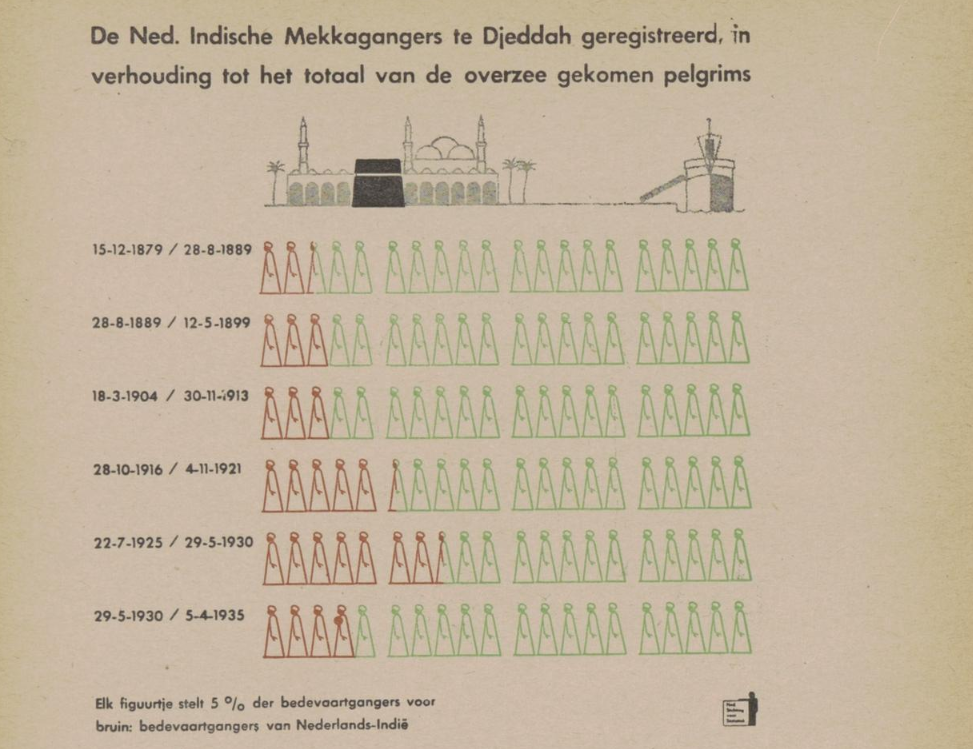
This article examines a historical dataset of Indonesian pilgrims traveling to Mecca between 1851 and 2016 to reflect upon the epistemological and political dimensions of quantification. Drawing on debates in digital humanities and critical data studies, it makes the case that quantitative historical data, and statistics in particular, are neither self-evident nor neutral but deeply embedded in changing worldviews and governance practices. While this seems to be widely accepted in terms of multimodal qualitative data, quantitative datasets are often perceived misleadingly as straightforward, with little discussion on how the numbers are produced. In this article, with this specific case, I argue that historical quantitative data should be treated in the same critical way. Using the concept of “storied statistics”, the study discusses how colonial authorities monitored the Hajj pilgrimage to prevent anti-colonial sentiment, later reframing it as a story of prosperity. By tracing the entanglement of Hajj statistical records with colonial and post-colonial agendas, the article argues that quantitative data must be approached with the same scrutiny as qualitative data.